There’s something of a revolution happening in our country, but don’t worry, it’s a very good thing for our productivity.
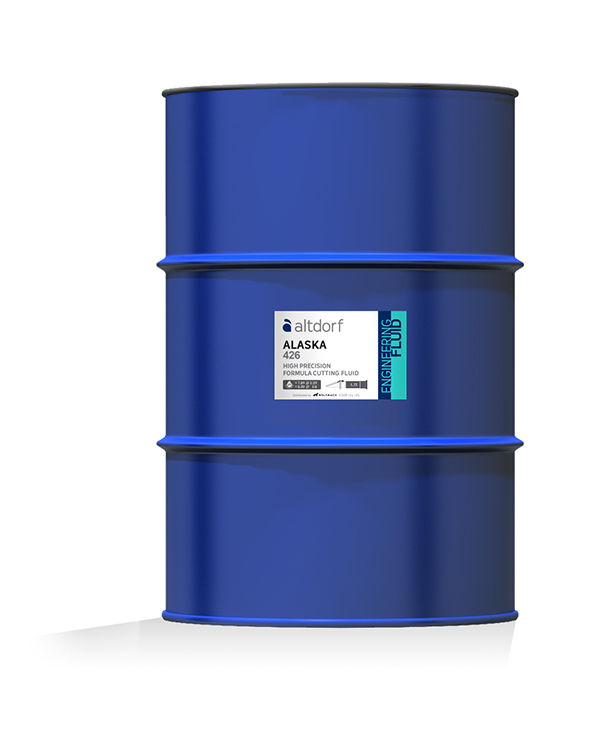
Don’t panic, we’re not going to be seeing a fleet of drones and paratroopers coming down from America’s frozen North, we’re talking about Altdorf’s game-changing fully synthetic cutting fluid, Alaska 426, which continues to gain territory in our engineering industry by solving a raft of common problems faced by users throughout the country.
This is not a marketing-led invasion based on propaganda and pyrotechnics, either, it’s founded on a growing user base who have seen for themselves the genuine benefits of switching to this technologically advanced formulation.
Of course, we would tell you it’s a great choice, we’re selling it after all.
But take a look at the comments from real NZ users who have already made the switch:
An implement manufacturer in Tokoroa was having problems with severe foaming in any brand of semi-synthetic coolant they were using on their CNC lathes. We advised them to use Alaska 426 and asked them to let us know how they got on. “We changed over the coolant and ran the (problem) hard chrome job all day; there is just a very small amount of residual foam. We’ll test for a few more days then order a drum.”
A Rotorua gear manufacturer also changed to Alaska 426 following a general lack of satisfaction from their previous coolant choices and the results were immediately noticeable. “Tool life has improved using Alaska, the machine is in a nicer state, the concentration of the fluid doesn’t drop, and the colour of the swarf has changed from blue to silver (i.e. reduced heat in the chips).”
A CNC machine shop in New Plymouth found improvements through consistent levels of fluid and its protection against corrosion. “The coolant is lasting much better, I think the old stuff was evaporating a lot. And (we’re) getting much fewer rust issues when concentrations dilute a bit.”
A machine shop in Kerikeri tried Alaska 426 on a Teach lathe and CNC machine and were impressed with the improvements, particularly the finish. “(The) results are outstanding, perfect surface finishes on aluminium & steel, much improved deep hole drilling in aluminium, no longer any steaming or workshop fog, noticeable increase in tool life & (we) want to switch over our other CNCs…”

An Upper Hutt industrial manufacturer had excellent results on their CNCs. “Our workshop fog has disappeared, and tool life has improved. Cleaner coolant & machinery.”
A leading Blenheim engineering manufacturer echoed several other users’ comments. “(Alaska 426 is) much cleaner than our previous choice (no greasy film), more stable & holds concentration levels well – 4 or 6 week adjustment compared to weekly on the old one.”
A Christchurch stainless steel supplier found their biggest positive came from a different benefit of Alaska 426. “Very happy with Alaska 426, definitely sorted out our recurrent infection problems.”
A major CNC machine shop in Napier commented on several benefits that other users had found, but also added something different. “(There’s a) lack of smell and it’s much nicer to deal with. compared to the other machine that also has a fresh load of another coolant in it. Also, it doesn't feel as harsh on the skin and seems to work well with stainless steel.”
A large engineering & machining company in Gisborne gave a detailed assessment of their comparison of Alaska 426 and saw several positives from the trial, particularly in the increased tool life it provides.
Benefits:
Tool life (all tools): “Noticeable across the board, but especially in stainless. Previously, general-purpose inserts were getting chewed up in stainless; now I can run the same tips with no issues. That’s reduced mid-job tip changes and material-specific swaps.”
Heavy drilling: “I’m comfortably pushing larger U-drills than before without the insert wear I used to see.”
Chip temperature: “Chips are coming off much cooler.”
Where do the savings come from?
-
Increased tool life, especially in stainless, means tooling costs are down and tool changes & breakages are reduced;
-
Improved surface finish means reduced further processing requirements, saving time and tools;
-
Superior infection resistance means less frequent coolant changes, saving in downtime while improving workshop OSH concerns and reducing staff sickness;
-
Better concentration stability offers reduced coolant maintenance downtime;
-
Exceptional cooling ability further enhances finish quality, protects tools and machinery and typically reduces workplace fog for a dramatic efficiency boost.
What are the downsides?
Obviously, being a leading-edge technical product, the up-front costs are a bit higher than most of the fossil-fuel derived mineral oils and many of the available semi-synthetics, and the ideal concentration for machining is 8%.
Unlike traditional oil-based formulations, the lubricity of Alaska 426 is only ‘activated’ once it reaches working temperature, so it requires a certain amount of friction to perform as intended. For light duty work which doesn’t reach a cutting temperature of 30 degrees or higher, such as small diameter/short depth aluminium tapping, additional tapping fluid should be applied directly to provide the required lubricity. Another consequence of its non-oil base is that Alaska 426 does not oil your machinery, so extra lubricants may be required.
Our conclusion:
Nothing is universally suitable for every user, but what we’re finding with Alaska 426 is that for those users who fit the target audience, it can genuinely be a game changer, with unprecedented improvements in areas that really matter. Tool life savings alone could easily exceed the difference in price between Alaska 426 and other coolant options, but adding in things like the stability & infection resistance and significantly improved surface finish, it can make a real contribution to your bottom line. If you’re thinking that Alaska 426 could be the right coolant for your production, you really need to consider switching, at least for a comparison to the coolant you currently use.