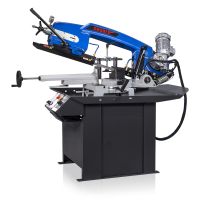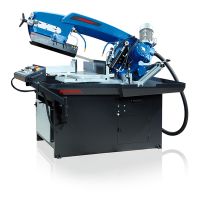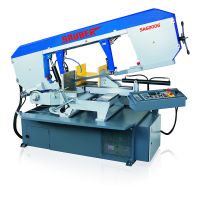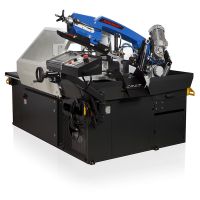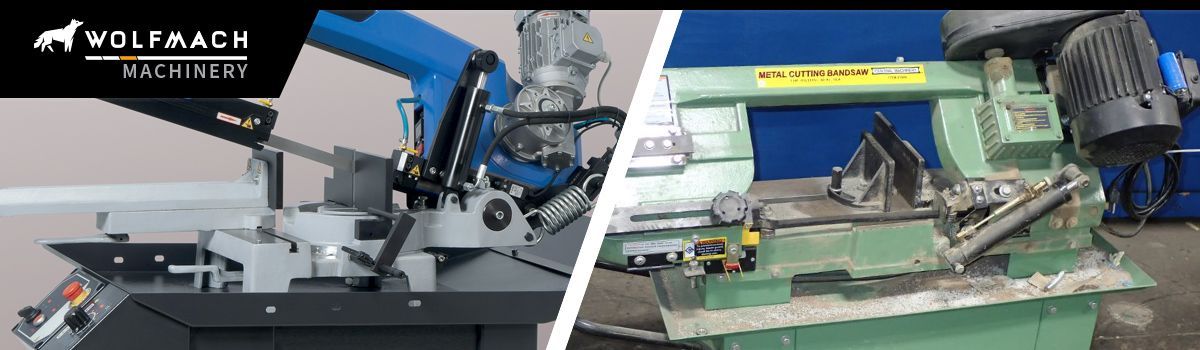
Every workshop manager eventually has to ask themselves this question.
For the majority of New Zealand fabricators and engineering shops, this isn't just about initial cost, it's about total cost of ownership, downtime risk, and long-term reliability. The decision is made less straightforward with a relatively narrow range of new bandsaws generally available “off the showroom floor” and a market heavily influenced by price-conscious budget brands, while the used market offers everything from well-maintained European machines to questionable imports with unknown histories.
Select the titles below to see more about each topic.

The Financial Reality: More Than Just the Price Tag: The most obvious advantage of buying used is the lower purchase price. Second-hand industrial bandsaws in good condition typically sell for 40-60% of new machine prices. However, a true cost comparison requires looking beyond the purchase price.
New machines typically come with 12-24 month warranties, transferring risk during the critical early period when any manufacturing defects tend to appear.
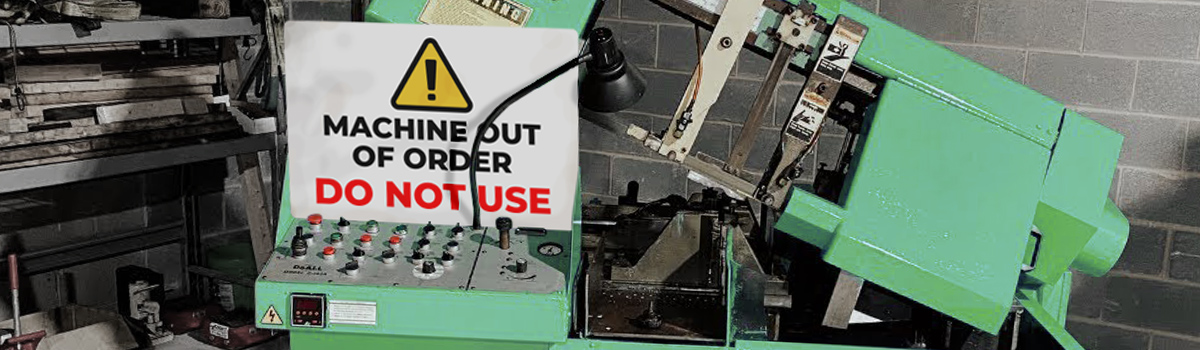
Used machines come largely as-is, with any repairs immediately becoming your problem and incurred costs quickly adding up - the Australian Manufacturing Technology Institute reports that on average unplanned downtime costs manufacturers over $300 NZ an hour. A problematic used bandsaw requiring frequent repairs can quickly cost more in lost productivity than the savings from buying second-hand.
Availability and Lead Times: While new machines from European or Asian manufacturers typically face 12-20 week lead times, this can be avoided if buying from a New Zealand importer so long as they have the required model in stock.

Used machines within New Zealand can potentially be available within days or weeks, allowing personal inspection and domestic transport. However, the used market is limited and unpredictable. If you need specific capacity - say, a 330mm automatic bandsaw with touch-screen controls - you might wait many months for the right used machine. With new equipment, you specify exactly what you need.
Machine Condition and Reliability: New machines arrive correctly aligned and adjusted with a known history. With used equipment, you're inheriting someone else's maintenance practices. Research in the International Journal of Advanced Manufacturing Technology shows poorly maintained bandsaws can have up to 3mm deviation over 300mm cuts, definitely not what you need from your new investment.

Critical wear points include blade guide bearings, drive wheels & bearings, gearbox, hydraulic seals, frame alignment, and controls. While some issues are visible during inspection, internal bearing condition and frame stress aren't apparent without disassembly so the risks are again borne by the purchaser.
Technology and Features: Modern bandsaws increasingly feature variable speed control, programmable cutting cycles, and automated material handling. These improve productivity and reduce operator input allowing tighter costings and improved margins. Buying new gives you access to current technology whereas used machines generally lack these features unless they are recent models at the higher end of the second-hand price range.
Parts Availability & Support: New machines from reputable suppliers come with established parts supply chains and technical support – see the Wolfmach Warranty & Parts Policy HERE. Used machines, particularly older models, can present parts sourcing challenges, with obsolete components that may be impossible to replace. This becomes critical for automatic machines. A failed control board on a 20-plus-year-old automated bandsaw might be unreplaceable, while new equipment should have parts support for the machine's commercial life.
The Verdict: Which Path Makes Most Sense? For most New Zealand engineering and fabrication companies, buying new makes more financial sense despite the higher initial cost. The warranty protection, known condition, current technology, and established parts support create lower total cost of ownership.

Buying new is particularly sensible if:
- The bandsaw will see regular daily use;
- You're buying automatic or semi-automatic machines with complex controls;
- You need specific features or capacity not commonly available second-hand;
- Downtime would significantly impact operations;
- You're running a production environment where reliability is critical.
- Used equipment makes sense in specific situations:
Budget constraints are severe and immediate;
- You're adding capacity for occasional use or backup;
- You have in-house maintenance capabilities;
- You can find a well-maintained machine from a known source;
- You're willing to accept higher risk for lower cost.
Final Considerations:
For peace of mind, buying a good quality, reputable new machine from a well established importer offering full aftersales care and appropriate parts support is the best option.
Whatever path you choose, avoid cheap imported used equipment without local support. New Zealand is too far from major markets to risk purchasing equipment without established local service or parts availability, so determine support providers and their capabilities before you buy.
If buying used, purchase from known workshops with good reputations rather than liquidation sales. Remember that if operators have been running low on liquidity, maintenance is often one of the first costs to be cut. Being able to see the machine operating in its current environment and speaking with operators provides confidence and valuable insights.
Remember the bandsaw is one part of a cutting system. Factor in quality blades, proper coolant systems, and regular maintenance regardless of whether you buy new or used. A properly cared for modest machine will outperform a poorly maintained higher-spec machine.
NOTE:
A good Warranty & Parts Policy is a great way to minimise risk when buying a new machine. We decided to focus our policy on ensuring you get the best available pre-sales information and advice, the smoothest and most comfortable sales process and top-level after sales support and help, to ensure that you get lasting value from your new machine. Always check the policy of whoever you are considering buying from, to ensure you can rely on your investment into the future.